

Miscellaneous Musings
A few articles from our semi-monthly newsletter. Others are in the Tips and Neighborhood History sections of our site.
To receive the newsletter directly, add your name to the list.
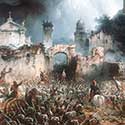
A Journey that Remade One Man’s Life and Benefitted Us All.
Every traveler has had a bad experience — a connection missed, or a hotel reservation misplaced — but thankfully few have encountered a situation like that Henry Dunant faced on an 1859 business trip to Italy. Approaching Solferino, he found himself in the midst of the bloodiest European battle in more than 40 years. Dunant never got the contract he went for, but the experience changed his life forever, and through his life’s work, improved the lives of people everywhere. Read More.

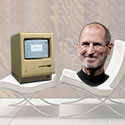
Steve Jobs and the Bauhaus.
Only with the benefit of hindsight can we truly appreciate the tectonic shift that occurred when Steve Jobs walked onto the stage in January 1984 to introduce the Macintosh. It combined cutting edge technology with sophisticated design and ease of use. But revolutionary as some of its innovations seemed, many applied principles pioneered at the Bauhaus more than half a century before. Read More.
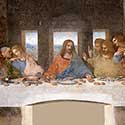
Why the Date of Easter Is So Complicated.
Easter 2019 is celebrated on Sunday, April 21. In 2018 it fell on April 1. At first it seems odd that the date changes from year to year, but in fact it remains constant on a lunar calendar, which is used to preserve Biblical relationships between the times of the crucifixion and the Jewish Passover holiday. Read More.
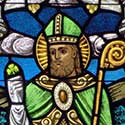
Saint Patrick: The Man and the Legend.
Think of Ireland and what comes to mind? Shamrocks? The color green? Guiness? For many people, it’s Saint Patrick, patron Saint of Ireland. Yet for all his fame, many of us know little about the man other than his name. So, who was he? And how much of his story is legend? Read More.

Cupid Falls in Love.
Cupid seems to pop up everywhere as Valentine’s Day approaches. Often, we see him as a cherub with a bow and arrow. But who is he, where did he come from and what happened when he fell in love? Read More.
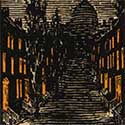
Christmas Traditions from Beacon Hill.
Beacon Hill and Christmas. They seem made for each other. Perhaps more than any other neighborhood in a city steeped in tradition, Beacon Hill evokes nostalgic memories. And those are exactly the kind of thoughts people want as they come together to celebrate the year that’s ending and wish each other well for the one to come. Thus, it’s not surprising that the Hill’s brick sidewalks and gas lit streets are the birthplace of some of America’s most cherished Christmas traditions. Read More.
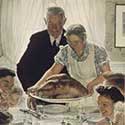
ThAnksgiving Dinner.
Turkey for Thanksgiving. It’s as American as motherhood and apple pie. Eighty-eight percent of Americans eat turkey on Thanksgiving. Many of us were taught that this is because the Pilgrims shared turkey with their Wampanoag neighbors at a Thanksgiving feast in 1621. Did they? And how did this annual ritual become a national institution? Read More.
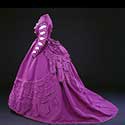
How Science and Politics Created a Color Called Magenta.
What do Emperor Napoleon III, the fight for Italian independence and the birth of the aniline chemical industry have to do with the color magenta? A lot: they are intricately interwoven in a tale arising from technical and political upheavals that swept Europe in the mid-Nineteenth century. Read More.
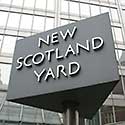
How Scotland Yard Got Its Name.
Scotland Yard. The very name evokes images of intrepid detectives on the trail of master criminals. Londoners know the Yard as headquarters for their beloved Bobbies while mystery lovers know its operatives as allies and rivals of Sherlock Holmes and Hercule Poirot. The Yard is probably the most famous police service in the world. But why call a police force Scotland Yard, especially when it’s headquartered hundreds of miles from Scotland? Read More.

The Web Browser Padlock: What It Means and Why It Might Soon Disappear.
The little padlock on a web browser’s address bar has become a familiar and reassuring sign of security. It used to appear only when sensitive information was to be submitted. Now it’s almost everywhere. Why? And why might it soon disappear? Read More.
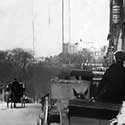
Touring 1906 Boston by Movie.
Imagine trying to describe your daily life to someone born in the year 2100. Someone who has never seen anything as dumb as a “smartphone,” except perhaps alongside adding machines and typewriters in a museum of antique technical curiosities. Then think how much simpler the task would be if you could show that future person a video of your activities. Its the same when we try to understand the past, which is why movies showing everyday life in the early years of the 20th century are so fascinating. Read More.
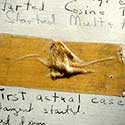
The Backstory on Some Common Computer Terms.
As more and more daily activities are performed with digital devices, the activities and the words used to describe them are increasingly becoming associated with the devices. The result is that we sometimes forget where the terms originally came from. Here is the background on a few expressions we use daily. Read More.
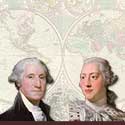
The King and the Man Who Would Not Wear a Crown.
George Washington and King George III never met; neither ever set foot in the other’s homeland. One was born to rule while the other was a reluctant leader. In some ways the gaps that set them apart were as wide as the ocean between them. Yet their lives were inextricably linked as one refused a crown while the other considered relinquishing his. Read More.

Where Did that Word Come From?
One reason the English language is such a versatile writing tool is its range of available words — look long enough and you’ll find one that says exactly what you mean. Most come from German, French, Greek, Latin or some other language the English-speaking people have come in contact with. Then there are the 1700 or so words Shakespeare is said to have just made up when he couldn’t find one he liked (that’s one of the privileges of being the most famous writer who ever lived). But some words have unlikely, interesting and often forgotten origins. Here are a few of them. Read More.
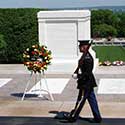
Unknown Soldiers: From Anonymity to the Holiest of Military Shrines.
A muted bugle sounds as heads are bowed and warriors bid farewell to a fallen comrade. Sometimes the terror of war renders unknown the identity of its victims. For millennia their remains were interred anonymously. Today the Tomb of the Unknowns at Arlington National Cemetery honors their memory and that of all who sacrificed everything for our freedom. This journey from obscure anonymity to the holiest of military shrines began in the garden of a small cottage amidst the battlefields of World War I France. Read More.
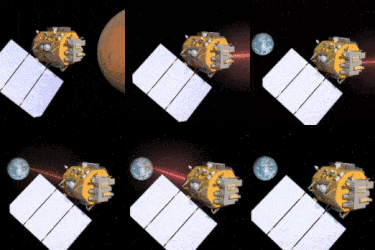
The Photophone and Interplanetary Communication.
Communication with Mars today is a little like yesterday’s dial-up modems — channels are slow and crowded. NASA is planning to address this problem with satellites that use lasers to relay deep space messages to Earth. Signaling by light rather than radio waves will provide sufficient bandwidth for high definition video transmissions between Mars and Earth. Read More.
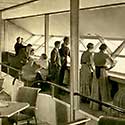
Traveling in Style.
It was to be the journey of a lifetime. Their vessel would inaugurate a new era in trans-Atlantic travel, shortening the trip to New York by days while gliding so smoothly over the waves that travel sickness would become a thing of the past. Spacious accommodations greeted travelers as they boarded. Their only regret was that it was night, so they couldn’t watch the land recede as the ship left its moorings and ascended to the heavens. Theirs was the greatest airship ever built, the Hindenburg, and this was its maiden voyage. Read More.
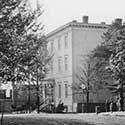
Spy in the Confederate White House.
Popular imagination sees spies as dashing heroes, surrounded by exotic cars, science fiction weapons and beautiful women. That might work at the box office, but the last thing a clandestine operative wants is to attract attention so most real-world spies try to fade into the background. Being a housemaid at the enemy’s executive mansion is the perfect job if you can get it, and that’s exactly how a most unlikely Union spy gained access to some of the Confederacy’s innermost secrets. Read More.

Creating Animated GIFs from PowerPoint.
Moving graphics are all the rage. Video immediately comes to mind, but the problem is you can’t use video everywhere, in many e-mails for example. That’s why one of the oldest graphics formats, animated GIF, is still so popular — it works nearly everywhere. What’s best is that you don’t need special software to create animated GIFs. If you can use PowerPoint, you can create them. Read More.
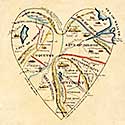
Guides for the Lost in Love.
As February 14th comes barrelling toward us, many begin to worry how they can make a certain someone feel special. Reportedly last year’s pub night watching hockey on the latest 4K TV at O’Rourke’s wasn’t a hit. Some seek high-tech solutions, hoping to find a GPS for the lover’s heart. But there’s a lot to be said for old-fashioned, tried and true approaches — after all, if they hadn’t worked, none of us would be here today. So here are some helpful resources. Read More.

Building Relationships.
Our world is built on relationships. The same is true with data we collect and generate. Sometimes we want to connect clients with projects, other times with invoices and payments. Having a system with the flexibility to do both is critical, otherwise we are plagued by needless duplication and the errors that inevitably brings. That is why relational databases are so useful. Read More.
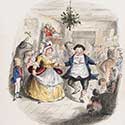
A Tale of Christmas Past.
In 1842 the British government issued a report on child labor in mines. It told of 16-hour days, squalid workplaces and physical dangers — conditions we would call Dickensian. Its authors could never have imagined the changes it would bring. Read More.
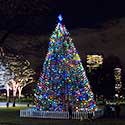
A Gift Born of Heroism and Tragedy.
Every December families gather on Boston Common to light the city’s official Christmas tree. A small sign explains that it is a gift from the people of Halifax, Nova Scotia, yet many who see it don’t know what the gift is for. But it celebrates one of our city’s proudest moments, when selfless generosity brought crucial aid to a neighbor whose world had literally just been destroyed. Read More.
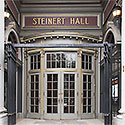
Music Beneath Our Feet.
Peer below the streets of Boston and you’ll discover places where the pulse of the city beats out of sight. Not just the subways and highway tunnels we all know, but smugglers tunnels rumored to exist in the North End, a spring that gurgles below Beacon Hill and remnants of a seven-mile pneumatic mail system. One of the most curious is a 650-seat concert hall hidden forty feet below Boylston Street. Isabella Stewart Gardner presided over its grand opening and for decades it hosted many of the world’s leading artists. Read More.
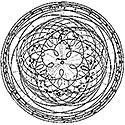
How Do We Know the Earth Orbits the Sun?
Several years ago a Nobel Laureate asked a group of scientists which of them knew how to demonstrate that the Earth goes around the Sun. They all said they believed it did, but only a few thought they could prove it. He chided the others: Do you just take it on faith? How much else do you accept without evidence?
So how do we know that the Earth orbits the Sun? Read More.
Organizing Data for Analysis.
You’ve gathered your data and put it all in the computer. You open your database or spreadsheet anxious to see what secrets it reveals. Then frustration — no matter what you do you can’t produce the analysis you had expected. Why, everything that’s needed seems to be there? Read More.

What Makes Hurricanes?
Hurricanes are making headlines these days. Cities are devastated; whole islands are without electricity, fuel or water. Hundred-year storms seem to occur every year. Some blame global warming, others say twentieth century storms were mild by historical standards. But what causes hurricanes? And why do they usually start at certain times of year and in the same places? Read More.
Why Private U.S. Health Insurance Is Tied to Employment.
Most Americans view private health insurance as something they get at work. It makes sense, after all it’s been that way for generations even as the workforce has become more mobile and employer plans less generous. But nothing makes health insurance a natural part of the employment relationship. In fact the connection is pretty much unique to the United States. The story behind that illustrates how seemingly minor choices can have major, long-range effects. Read More.
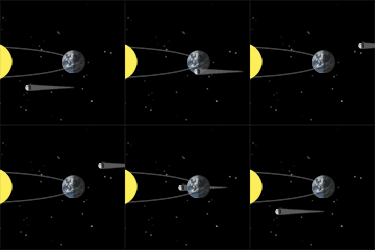
Something Is Eating the Sun.
Imagine looking at the sky and seeing the Sun — one thing we can always count on — being devoured by an ominous black being. The ancient Chinese and Incas made noises to scare the demon away. It worked, the Sun always came back. Today we can predict eclipses and know why they happen, but they continue to fascinate us. What is it that makes them special, and why are they so rare? Read More.
Staying Cool.
It’s that time of year — temperatures are rising and people want to stay cool. Many of us have the luxury of climate control — turn a dial and cool air fills our home or office. But what did people do before air conditioning? Read More.
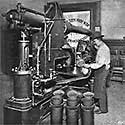
Underground Mail.
Once upon a time important things were sent by postal mail — business proposals, vital news, greetings from loved ones far away. People waited anxiously for the mail and it was handled accordingly — two deliveries a day at home, three to four at work. Same or next day delivery for the price of a stamp may seem a fantasy today, but a century ago it was expected in major cities. And to meet the demand for speedy delivery, the Post Office built networks of underground tubes to transport the mail. Read More.
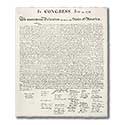
Why We Celebrate the Declaration of Independence.
“We hold these truths to be self-evident … .” Penned over 240 years ago these words sound a clarion call for freedom that transcends time and place. The document signed in Philadelphia is held so sacred that it was one of three national treasures sent to Fort Knox for safe-keeping during World War II. Every Fourth of July it is recited in town assemblies across America. But why do we care so much about a faded piece of parchment? Read More.
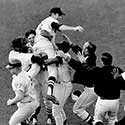
The Impossible Dream — 1967 Red Sox Quest for the World Series.
To dream the impossible dream …. Fifty years ago those words immediately brought to mind the hit song from The Man of LaMancha, a musical about an elderly knight, Don Quixote, who undertakes noble, but seemingly impossible quests. To baseball fans arriving at Fenway Park in April 1967 the idea of the Red Sox playing in the World Series seemed as mad as any of Quixote’s adventures. Read More.
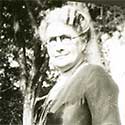
The Letter from Mom that Won Women the Vote.
We Americans often take the right to vote for granted. Every election we hear people say their lone vote doesn’t matter. Nothing, however, could be further from the truth. Even something as large as the campaign for women’s suffrage, which lasted decades and required the combined efforts of thousands, in the end was decided by the vote of just one person. Read More.
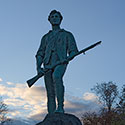
Messenger of Revolution.
For most of us the American Revolution means the Declaration of Independence, George Washington, Paul Revere and some battles. But a lot happened behind the scene — someone had to build and nurture our alliances; obtain weapons and promote the cause both among supporters and adversaries. In fact one of the rebellious colonists’ earliest victories was achieved in the fight for public opinion. Read More.
Tomorrow’s News Today.
Think how successful we would be if we could know tomorrow’s news today. The advantage, of course, is the same if we can know yesterday’s news today when no one else will learn it until tomorrow. For generations it has been the publisher’s quest not only to have all the news, but also to have it first. And they have gone to great lengths to get it — after all, it isn't news if it’s old. Read More.
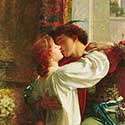
What’s in a Name?
What’s in a name? Shakespeare tells us that “a rose by any other word would smell as sweet.” But would it really? True our names don’t define who we are, but they often say something about us. And some have even achieved immortality by entering our vocabulary and continuing in daily use long after the name’s original owner has been forgotten. Read More.
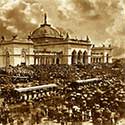
May 10, 1876 — Big Day for Alex and the World.
On May 10, 1876 a young professor demonstrated an invention in Boston while the eyes of the nation were on President Grant opening the Centennial Exposition in Philadelphia. Today we all use the professor’s invention while the Exposition is but a footnote to history. Read More.
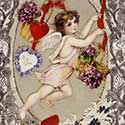
Valentine’s Day.
There is so much depressing news these days it seems like a good time to talk about something uplifting, like love. And with the traditional lovers’ holiday coming up next week, the topic seems obvious — Valentine’s Day — where it comes from and why we celebrate it. Read More.
What Are They Thinking?
We pass statues every day as we walk about the city. Ever wonder what they are thinking as they watch us? If only we could read their minds. Read More.
How the U.S. Military Threatened Civilian Authority.
The nomination of General James Mattis to be Secretary of Defense brought to light a law barring retired officers from holding that office for seven years following active duty. The rule seems silly at first; don’t we want the person at the top to be familiar with the organization? But a larger principle is at issue, namely civilian control of the military — one that was established by George Washington himself when it was threatened in the earliest days of the republic. Read More.
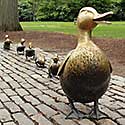
Make Way for Ducklings.
Many of Boston’s literary landmarks are primarily of interest to adults. But one beloved by young and old alike is Make Way for Ducklings, the charming story of a duck family living in Boston. During the 75 years since its publication, the story has become an integral part of the Boston Public Garden’s identity and has even played a role in international diplomacy. Read More.
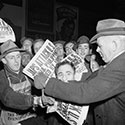
Punched in the Gut: December 7, 1941.
What was it like to live through the day when Pearl Harbor was attacked? We can never fully recapture the experience since the people living it had no idea what was going to happen next while we can never forget. Tom Brokaw calls Pearl Harbor the birthplace of the Greatest Generation, the men and women who saved the world from a second Dark Age. But on that chilly December day seventy-five years ago they were still kids who had just been punched in the gut. Read More.
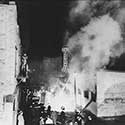
the Cocoanut Grove.
November 1942. World War II is raging overseas. As the month draws to a close, Americans are gathering for the first Thanksgiving of the war and a long weekend of family, friends and traditional holiday fare. In Boston the festivities end abruptly as fire tears through a crowded nightclub on Saturday night. Within minutes 492 people perish and the club’s name — Cocoanut Grove — is seared into the minds of a nation. Read More.
They Came to America.
Immigrants are much in the news these days, often portrayed in an unflattering light. It almost seems some Americans think the Statue of Liberty faces the wrong way. But most of our families hail from foreign shores, so obviously all new Americans don’t turn out bad. In fact our country’s position as world leader in information technology owes much to innovations made by a few recent arrivals. Read More.

Beautiful Doesn’t Mean Stupid.
No one is surprised to learn that smart people can also be artists and athletes — Einstein was a violinist, Churchill a painter, Jefferson an architect and Alan Turing an Olympic-level marathoner. Movie stars and athletes, however, are often dismissed as incapable of anything requiring intellect. But as the saying goes: looks can be deceiving. Read More.
How Did People Get By WIthout Computers?
Everyone seems to be staring at digital screens these days. A few appear so transfixed one would think they are receiving the word of God. Perhaps it’s time to look at the millennia of human achievement that predate computers. Read More.
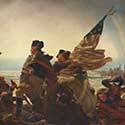
Interpreting Old Glory.
The U.S. flag is one of the most recognized symbols on Earth — loved by many, reviled by some — everywhere it represents our country, its people, history and aspirations. But why is it red, white and blue, and what do the stars and stripes represent? Read More.
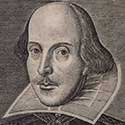
Who Said It?
There’s a bug in my computer, she has a spotless reputation, don’t budge an inch. These are expressions we use every day, but where do they come from? Some are from everyday people, others from literary giants like Shakespeare. Here are the stories behind a few. Read More.
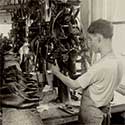
How Massachusetts Became Shoemaker to the Country.
Why is Silicon Valley in California? Will Boston be the hub of life sciences? It’s not something in the water, but more like growth of a tree — many seeds are planted, some take root, a few give rise to towering forests. The growth of the Massachusetts shoe industry provides a telling example. Read More.
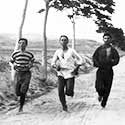
The First Marathon.
Runners crave the challenge of a marathon. Today’s races attract thousands, but the first marathoner ran alone and expired at the finish line. Yet it is his effort that gives the race its name and distance. What makes this solo run so memorable? Read More.

Isaac Newton CSI.
So what did Sir Isaac Newton when he wasn’t inventing calculus, figuring out gravity, explaining the laws of motion or devising the color wheel? Well naturally he went on London pub crawls pursuing criminals. That’s right, Isaac Newton, the person whose portrait hung above Einstein’s desk, was also one of seventeenth century England’s top crime fighters. Read More.
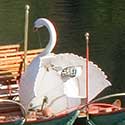
BOSTON’S SWAN BOATS.
Boston loves tradition. In Spring we have Opening Day, the Marathon and arrival of the Swan Boats. Having been around nearly 140 years, the Swan Boats are the oldest of these. And remarkably the same family has operated them the entire time. Read More.
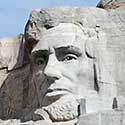
WHERE IS ABRAHAM LINCOLN WHEN WE NEED HIM?
It’s a presidential election year and, as the political discourse turns increasingly personal and puerile, many of us long for the days when statesmen stood for election and spoke to the issues. So let’s look to the pantheon of American leaders and see how the men on Mount Rushmore really behaved. Read More.
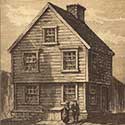
BEN FRANKLIN IN BOSTON.
What does Franklin have to do with Boston — everyone knows he was from Philadelphia? True, Franklin made his name there, but he was born and raised in Boston. If you live or work downtown, you walk past his boyhood haunts every day. Read More.

WHY DOES THE NEW YEAR BEGIN ON JANUARY 1?
Come January 1st fireworks will explode and champagne corks pop all around the world as we celebrate the arrival of a new year. But why that day — It has no special astronomical, religious or civic significance? As with much of our world the story is a curious blend of science and religion with a dash of human vanity thrown in for interest. Read More.
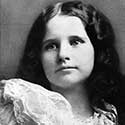
SANTA LIVES IN THE HEARTS OF CHILDREN.
Generations of children have trusted in the reality of Santa Claus. And their faith has drawn sustenance from the efforts of a most unlikely pair: an eight-year-old girl and a middle-aged journalist. Together they created one of our most treasured holiday traditions and an enduring statement of eternal values. Read More.
There’s No Limit to How Far a Young Person Can Go.
The Boston Public Library recently displayed a 1750 site plan as part of an exhibit about the American Revolution. Most people walked right past, but the site plan may have been the most interesting item in the multi-room exhibit. You just had to look closely to learn why. Read More.
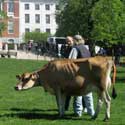
Tails of Boston Common.
Today most tails on Boston Common belong to dogs romping in the off-leash areas or squirrels foraging for food. But for our ancestors the most important tails on the Common belonged to livestock, especially cows. In fact much of the early history of America’s oldest public park involves cows on the Common. Read More.
Who Is CharlieCard Charlie?
Bostonians know that “Charlie” is the man on the MBTA’s electronic fare cards. That’s why they’re called CharlieCards. Many also know that the name comes from a song about a rider who couldn’t get off the subway because he didn't have the exit fare. But did you know that some of the story is true, that it began as a campaign jingle and that it was embroiled in 1950s anti-communist witch hunts? Read More.
Why Are Pumpkins Part of Halloween?
Shorter days and nippy nights herald the onset of autumn. For kids throughout America that means time to find the perfect pumpkin for this year’s Jack O’Lantern. But who is Jack and what do carved pumpkins have to do with Halloween? Read More.
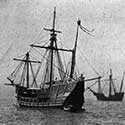
WHO DISCOVERED AMERICA?
Every year we celebrate Columbus Day — a long weekend, perhaps a few big sales. But few believe Columbus really got here first. So who did and why don’t we know for sure? Read More.
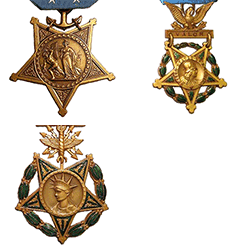
DECORATION FOR VALOR.
When does a general salute a private? Answer: When the private wears the Medal of Honor. For more than 150 years the Medal has been presented to members of the United States military for acts of exceptional valor. Yet most recipients accept the honor with humility, viewing it as an individual citation for a collective effort. Read More.
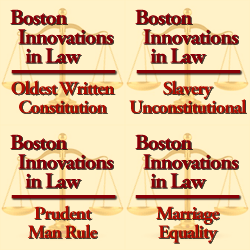
BOSTON INNOVATION: THE LAW.
Boston has long been an engine of innovation. For nearly four centuries it has been home to people willing to challenge the norm and forge new paths. One area of leadership has been development of the law. Read More.

HOMELESS TONIGHT:
BOSTON’S GREAT FIRE OF 1872.
Mention San Francisco or Chicago’s great fires and there’s immediate recognition — they're the two largest urban fires in U.S. history. But far fewer know that third place goes to Boston, where most of the commercial district was burnt to the ground in 1872. Sixty-five acres and 776 buildings were destroyed. Insurance companies went bankrupt. Read More.
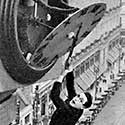
IT’S ABOUT TIME.
Tick, tick. Time marches forward. Our lives are run by it: Get up; Race to work; Meet deadlines. Sometimes it feels as if we’re dangling from a clock. People have always tracked time. But our perception and measurement of it have changed over the years. Here briefly is time’s ageless story. Read More.

WHY WE SHOOT FIREWORKS ON JULY 4th.
Fireworks on the Fourth. They’re as American as motherhood and apple pie. But where did they come from, how did the tradition start and why has it continued as times have changed? Read More.
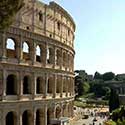
THE GRAND TOUR — 21st CENTURY STYLE.
Back in the day young aristocrats finished their education with a Grand Tour — several months or even years spent touring the Continent before settling down to life’s hard work of hunting foxes and lording over the manor. Incredibly internet-connected high definition video cameras now let us visit the same places without leaving home. Read More.
WHAT DO MOTHER’S DAY AND MEMORIAL DAY HAVE IN COMMON?
Both are in May, but otherwise it’s hard to imagine two holidays more different: flowers, candy and family dinners versus barbeques, parades and ball games. But the holidays share more than the calendar — both arose from revulsion to the horrors of the Civil War. Read More.
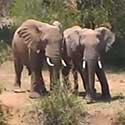
ARMCHAIR SAFARI.
It used to be you had to be very rich and have a lot of time to go on safari. Today live streaming internet cameras make it possible for everyone to participate, at least remotely. Read More.
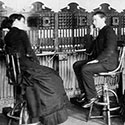
TELEPHONE FLIRTING — 1883 STYLE.
Alexander Graham Bell invented the telephone in 1876 and was the Bill Gates or Steve Jobs of his day. But even then, technology wasn't all business, as is obvious from a story that went viral in 1883 of a young man's attempt to flirt by telephone. Read More.
MAKING YOUR VOICE HEARD.
We have all been frustrated by indifferent “customer service” representatives and endless telephone chains. So it’s nice to see how some have pierced corporate defenses to make their voices heard by calling CEO’s moms, writing songs and even sending clay tablets. Read More.
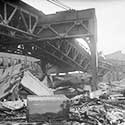
THE MOLASSES FLOOD.
Truth is often stranger than fiction. Most would dismiss as ludicrous a movie about a 25 foot tall wave of molasses that flooded city streets, killed 21 people and injured 150. Yet that is exactly what happened in Boston's North End on January 15, 1919. Read More.
HOW GPS CAME TO BE.
Where do good ideas come from? Thomas Edison said genius is one percent inspiration and ninety-nine percent perspiration. Author Steven Johnson suggests that work environment and social interactions play a role as well. GPS evolved from two curious young physicists listening to Sputnik on a microwave radio after lunch. Read More.
ART AND TECHNOLOGY.
Architects design structures; engineers complain they can’t be built. Apple products with solid technology sell like hot cakes because their design is exceptional. Art and technology have always been a team of rivals. Like a constantly feuding couple, neither can live with nor without the other. Read More.
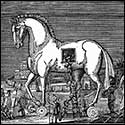
WHY IS EVERYONE GETTING HACKED?
Turn on the news and you hear about hacking. December 2014 it was Sony Pictures; previously retail giants Home Depot and Target. January 2015 saw social media sites of the U.S. Central Command hacked by the Islamic State. Why so much, and can we protect ourselves? Read More.
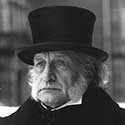
WHEN BAH, HUMBUG WAS THE LAW.
"Bah! Humbug!" Thus Scrooge greeted his nephew one Christmas Eve and with two words became one of literature’s most enduring characters. Poor Scrooge. He simply lived in the wrong time and place. For in 17th century Boston not only was bah, humbug the norm, it was actually the law. Read More.
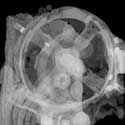
COMPUTING IN THE TIME OF CAESAR.
Most of us think of computers as shiny new devices. But recent discoveries from a tarnished bronze device found in 1900 in the wreck of a Roman freighter reveal that more than 2000 years ago ancient Greeks may have built mechanical computers that could calculate phases of the Moon and dates of eclipses. Read More.
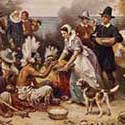
HOW THANKSGIVING WENT FROM LOCAL FEAST TO NATIONAL HOLIDAY.
Thanksgiving is many people’s favorite holiday — lots of food, friends and family; no pressure about gifts; everyone can celebrate. We learned about the first Thanksgiving in school, but how did it become a national holiday? Read More.
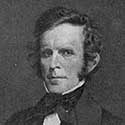
HOW CLOTHING INNOVATION HELPED EDUCATE THOUSANDS OF WOMEN: JOHN SIMMONS AND THE FOUNDING OF SIMMONS COLLEGE.
Walk into a store, try on a suit, wear it the next day — we take ready-to-wear clothes for granted. This seemingly simple idea made a fortune for its developer, John Simmons, and helped to educate thousands of women. Read More.
PASSWORD SAFETY.
You wouldn’t "hide" the key to your house under the doormat; it’s just as risky to tape your on-line passwords to the bottom of your laptop. Here are some simple, practical tips to keep your on-line passwords safe. Read More.
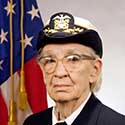
WOMEN PIONEERS IN COMPUTING.
Only 17% of Google’s technical employees are women as compared to 48% of its non-technical workforce. But in the early days of computing women played key roles, especially in programming. Here is an introduction to a few of those pioneers. Read More.
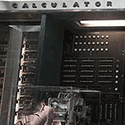
HEAVYWEIGHT COMPUTING.
You can hold a computer in the palm of your hand or wear one with your glasses, but once upon a time you couldn’t even lift one — forget desktop versus laptop, think room-size. Read More.
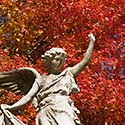
WHERE AUTUMN COLORS COME FROM.
Days grow shorter, nights get cooler and our New England trees put on glorious cloaks of yellow, orange and scarlet. Why? And where do those colors come from? Read More.
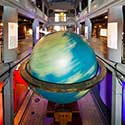
ORGANIZING ALL THE WORLD’S INFOMRATION — MUNDANEUM.
Since the dawn of civilization humans have sought to organize knowledge. Ancient Egyptians created the library at Alexandria. And a similarly ambitious, but largely forgotten project was undertaken in Belgium over 100 years ago — the Mundaneum. Read More.

WHY COLORS SOMETIMES CLASH.
We choose color every day — a blouse to match the skirt, a carpet for the sofa, flowers for the table. Some combinations work, others don’t. Why? And how can we find the ones we like? Read More.

WHAT DOES GOOGLE MEAN AND HOW DID IT BECOME A COMPANY NAME?
Everyone knows Google, the word is even in some dictionaries. But what does it mean and how did it become the search engine company’s name? Read More.
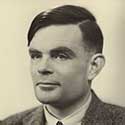
PIONEERS OF COMPUTING: ALAN TURING.
Winston Churchill said the Allies won World War II thanks to his project, the "Nobel" prize of computer science is named for him, as is the test for machine intelligence, yet few outside the scientific community know his name. He is Alan Turing. Read more.
COMPUTING IN THE CLOUD.
These days talk of computers often turns to "cloud computing." Sounds like a laptop or iPad on a plane, but it’s not. So what is it and is it right for you? Read more.
WHY DO WE CELEBRATE INDEPENDENCE ON JULY 4?
The Continental Congress voted for independence on July 2 and the Declaration of Independence itself wasn’t signed until August. But it is next Friday, July 4, that fireworks will erupt over the Charles and similar celebrations will take place throughout the land. How did the Fourth become the big day? Read more.

WHAT IS GIS?
Often confused with GPS, a GIS (geographic information system) relates data to location so that it can be plotted on a map and used in calculations. This article explains the basics and points you to on-line resources. Read more.
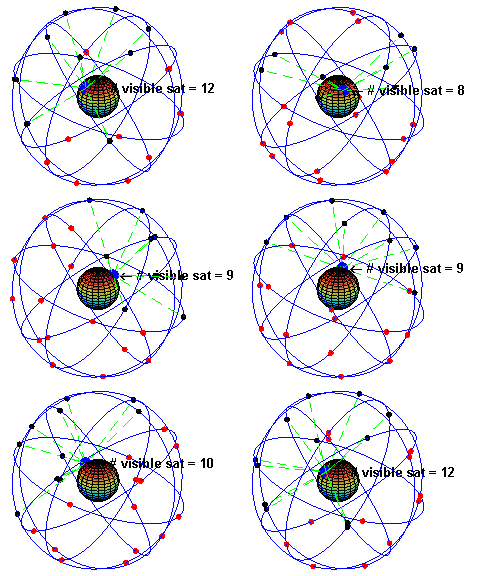
HOW DOES GPS KNOW WHERE YOU ARE?
The Global Positioning System consists of a network of about 30 satellites that communicate directly with your GPS receiver. The satellites tell your receiver where they are; your receiver uses that information to compute where you are. Read more.
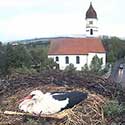
ARMCHAIR BIRDWATCHING, REDUX.
The internet lets us spy on animals at home. Nesting bird families have become a favorite — this year’s cameras include a baby albatross in Hawaii, Bald Eagles in British Columbia and a stork in Germany. Read more.

ON-LINE TRACKING: WHO IS WATCHING YOU?
Ever make a Google search and then see ads about the same subject, even on seemingly unrelated sites? Welcome to web tracking: sites continuously compiling a dossier of your on-line activities. Read more.

FIND IT FAST WITH GOOGLE.
With millions of active web sites finding things could be like seeking a needle in a haystack. Luckily we have Google. Here are some tips for using it effectively. Read more.

SPECIALIZED GOOGLE SITES.
In addition to standard search, Google has several specialized sites, including the Google Cultural Institute, which lets you view the collections of 250 museums and take virtual walk through tours of 60 of them. Read more.
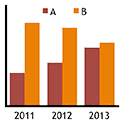
PICKING THE RIGHT KIND OF CHART.
Charts are great for telling stories, and software like Excel makes them easy to create. What’s hard is making sure they paint the picture you want. A good place to start is by using the type of chart that emphasizes what you consider most critical. Read more.
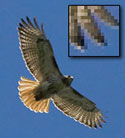
HOW MANY PIXELS ARE ENOUGH.
With the popularity of digital photography and web graphics we hear a lot about pixels. But what are they? How many are enough? When do we have too many? The answer depends on whether the image will be printed or displayed on screen, and more isn’t always better. Read more.
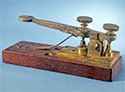
AN INVENTION THAT SHRANK THE WORLD.
Electric telegraphy ushered in the age of instant communications, enabling the development of fire alarms, standard time, the stock ticker, and other technologies central to modern industry and commerce. Read more.
SPEED UP FIREFOX: USE FLASH ONLY WHEN YOU WANT IT.
Flash is often used to stream videos you want and ads you could do without. Firefox now lets you activate Flash selectively, helping to speed performance and reduce annoyance. Read More.
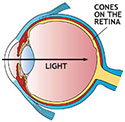
WHY IS RED, RED?
For the same reason that blue is blue: some light waves are longer than others. Computers use color to print photos and display graphics on a monitor: CMYK for print and RGB on-screen. Learn the difference and why. Read More.

RECYCLE OLD ELECTRONICS SAFELY AND RESPONSIBLY.
Lucky enough to get a shiny new laptop, iPad or Kindle for the holidays? Don’t throw the old one away without first making sure all data on it have been erased. Then dispose of it in an environmentally responsible manner. Read More.
NORAD SANTA TRACKER.
Every year since the mid-1950s, NORAD (North American Aerospace Defense Command) has assisted Santa in his travels. It all began with a phone number typo in a Sears ad and a colonel who didn’t want to disappoint the kids who called. Read More.
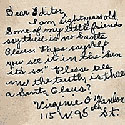
YES, VIRGINIA, THERE IS A SANTA CLAUS.
In 1897 Virginia O’Hanlon asked the New York Sun to "Please tell me the truth, is there a Santa Claus?" The paper’s response that there was may be the most reprinted newspaper column of all time. Read More.

STAYING SAFE ON-LINE.
You wouldn’t write your credit card number on a post card to be sent through the mail — Anyone who handled the card obviously could read it. Dangers on-line are similar, but less apparent since we can’t see what happens inside the computer. Read More.
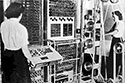
COMPUTERS HELPED BREAK GERMAN CODES.
Computing machinery helped the Allies break German codes during World War II. A programmable digital computer called Colossus was considered so secret that Winston Churchill ordered destruction of most of the machinery and documentation after the war. Read More.
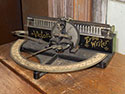
WORD PROCESSING 1890s STYLE.
In the 1890s typewriters were a brand new technology. The Victor Typewriter (right) was designed to be used as a laptop. Read More.
AROUND THE WORLD IN 80 SECONDS.
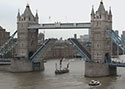
It took Phileas Fogg 80 days to travel around the world in Jules Verne’s novel -- we can do it in 80 seconds with a few clicks to video cameras on the Internet. The World Views page of our web site has links to cameras on seven continents and the International Space Station. Read More.
WHAT IS UTC?
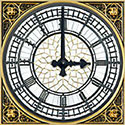
If a timestamp on your computer says -05:00 UTC, it means local time is 5 hours earlier than Universal Time (UTC). Since every time zone is plus or minus a certain amount from UTC, the system will know that it is 7:00 a.m. in Boston when it is noon in London. Read More.
COMPUTER HELPS BREAK ANCIENT CODE, REVEALING SECRET SOCIETY.
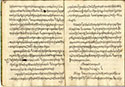
Reads like the DaVinci Code, but true. Following lecture on computers and language translation professor asks audience for challenging texts. German expert submits coded book she had been unable to decipher. Massive computing power, coupled with expert knowledge and library research uncovered 18th century secret society. Read More.
APPLE I COMPUTER SELLS FOR $671K.
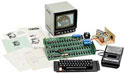
Most antiques and collectibles begin as junk that someone didn’t throw away. A few become valuable, like the working Apple I computer that recently sold at auction for $671,400. Read More.
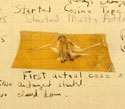
FIRST COMPUTER BUG CAUGHT AT HARVARD IN 1947.
In 1947 a computer at Harvard stopped working when a moth became stuck in one of its mechanical relays. Log book entry: "First actual case of bug being found." Glitches have been bugs ever since. Read More.
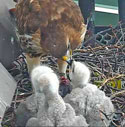
ARMCHAIR BIRD WATCHING.
Spring is here and young people’s thoughts turn to … well, the birds and the bees. True birders get up at dawn to catch the best views, but we can all participate vicariously through live cameras connected to the web. Read More.
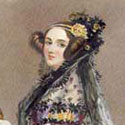
PIONEERS OF COMPUTING – ADA LOVELACE.
Computer programmers are often stereotyped as geeky males, but the person often regarded as the first programmer was a woman, Ada, Lady Lovelace, daughter of poet Lord Byron. Read More.
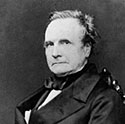
PIONEERS OF COMPUTING – CHARLES BABBAGE.
We usually think of computers as 20th century creations, but people have been building calculating machines for centuries. Probably the first to design a programmable device was Charles Babbage (1791-1871). Read More.
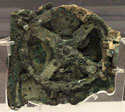
2000 YEAR OLD COMPUTER.
Discovered in 1900, for years this brass device sat in an Athens museum, its function a complete mystery. Recent analysis reveals that it was a mechanical computer that calculated astronomical cycles, some as long as 76 years. Read More.
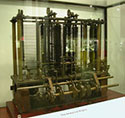
1830s COMPUTER FINALLY BEING BUILT.
Technology projects are notorious for being late, but 180 years? That’s how long it has taken for construction to begin on Charles Babbage’s Analytical Engine. Read More.
